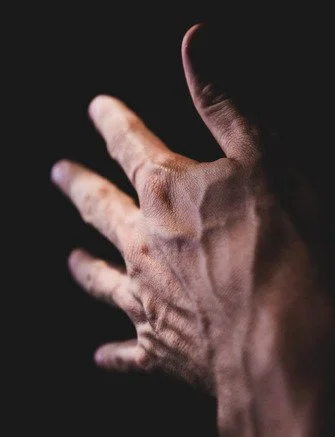
There are five fingers on my right hand. Each finger does something unique – point to a hawk, hold a ring – and all are needed. There are five Dojos in Chosei Zen: Wandering Ox, Daikozen-ji, Rhode Island, the Virtual Dojo, and Spring Green. Each Dojo does something unique, and all are needed. I don’t often think about my fingers as long as they are all working, but I do think a lot about our five Dojos. Given that, I want to describe how I look at the source of strength of our organization.
One thing I learned long ago is that people are most powerful in their actions when they feel fully alive, when there is no reason to imitate someone else. This is the source of the uniqueness I am talking about. When Wandering Ox plays full strength, it is a force to be reckoned with. When Daikozen-ji…when Rhode Island…when Virtual…when Spring Green…they are forces to be reckoned with.
What ties them together? How do they, how do you, know that they are part of one hand? I’ll answer that indirectly by talking about the calligraphy hung on the Spring Green Dojo wall after our most recent sesshin. There was the uncanny similarity between all of them that arises when the zazen has been clear and strong. We had participants from every Dojo except Wandering Ox with us, bringing the flavor of each of their Dojos, but all had been trained in the use of their breath and hara, the use of the senses, and an awareness of the degree of intensity called for. Those are the three elements placed at the core of Chosei Zen by our founder, Tenshin Tanouye Roshi: shugyo – hara – kiai.
So, how do we herd the cats? The first answer is “as little as necessary.” That can be difficult once we start organizing anything, but essential. We have recognized that there are different necessities, each one calling for a different group to gather.
We need to pay for electricity and other essentials, and we need to stay legal as an organization. So, there’s a Board of Directors.
We need to share lessons learned between our five Dojos – e.g. how to introduce students to Zen training. So, there is a Heads of Dojos Council.
We need to ensure the quality of our teaching. So, there is a Roshi Council.
You would think we want all of those groups to function smoothly, like clockwork. But the challenge is for them to only do what is needed and no more. This leads to disagreements, and to me that is good news. What we are learning, however paradoxical, is that groups do best when they embrace conflict as necessary. When there are differences, it is common for people to minimize them or ignore them. But when we do that, we pay a price – decisions sink to the lowest common denominator and none of us are then playing at full strength. You may have useful insights about areas where you, or us, are not at full strength. So, let’s talk.
From the woods – Gordon