
The Poetry of Small Events - The Tragedy of Large Ones
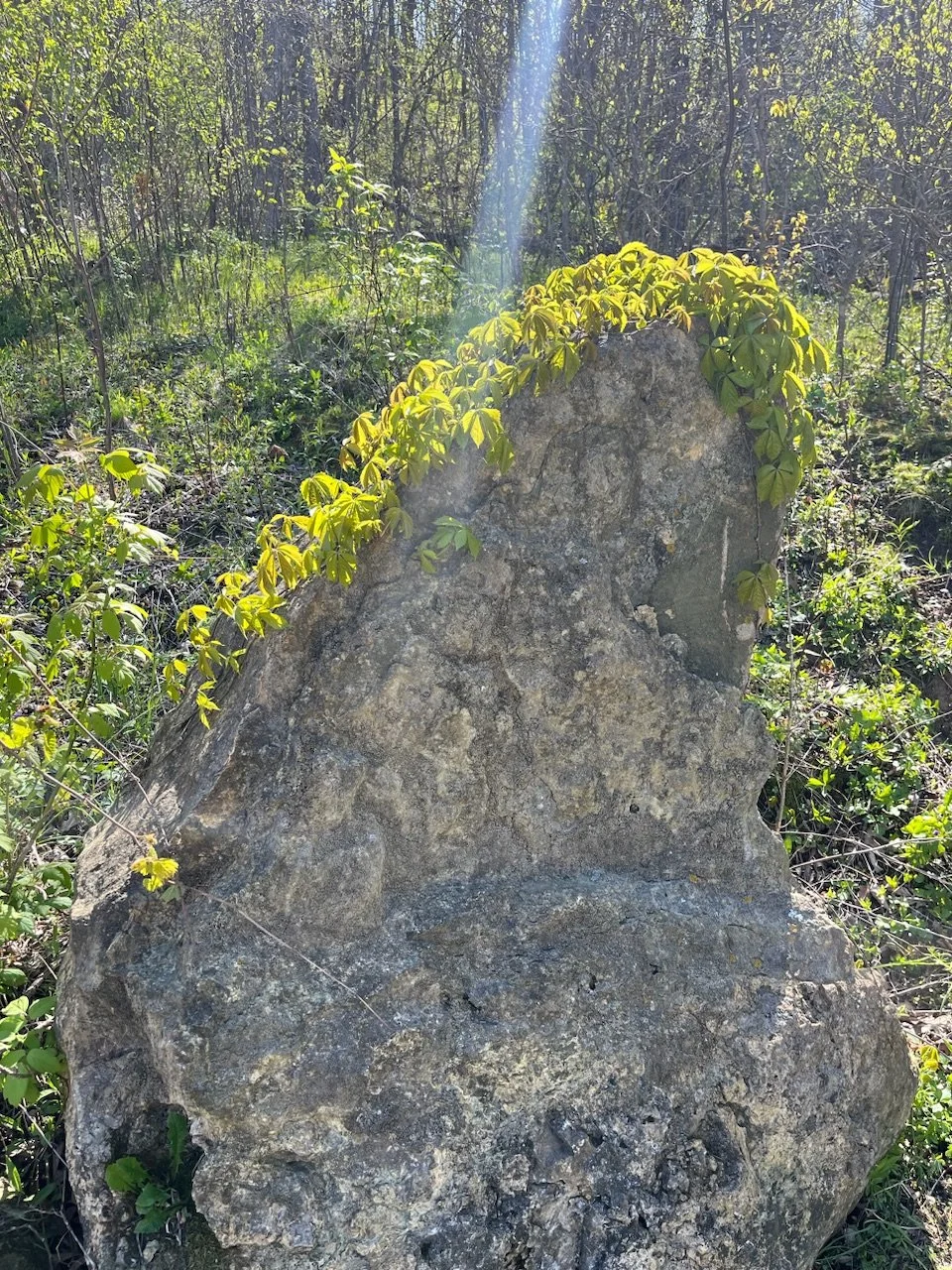
Proclaiming that a year has four seasons has never made much sense out here in the woods. Each of those seasons seems to contain elements of every other season. For example, think about the April snowstorm of a few years ago, arriving after trees had already budded.
I prefer the traditional Japanese calendar that names seventy-two “seasons,” each about five days long. For example, the period of April 20 – May 5 in that calendar has three seasons:
#16 – “reeds begin to sprout”
#17 – “frost ends, rice seedlings grow”
#18 – “peonies bloom”
There’s the same kind of acute attention to minor events in nature that we find in
Japanese haiku.
Knowing this Japanese calendar has sharpened my own attention to the day by day shifts we experience here. For example, we’ve just finished a “season” I would name “a green light in the woods.” It is a short period between the maturing budding of leaves in the trees and the time when the leaves start to show their final shape. When the buds first appear, the light in the woods is just light. Nothing has changed from earlier in the year. Once the leaves show their shape, then you mostly see leaves and not light. But right in between those two stages, there is just enough green present that the light in the woods appears to be a translucent green. That’s what I call a season.
Now, here comes some science. The study of cyclic and seasonal natural phenomena is called phenology. And those fleeting events can be called phenophases, moments like the arrival date of orioles to our woods, or the blooming of mayapples. One of the most noted recordings of such phenophases in Wisconsin was conducted by the writer and naturalist Aldo Leopold. During the period 1936 – 1947, he logged over one hundred distinct events, year after year, creating his own calendar, his own haiku.
What do those records tell us? The climate is warming. On average the first robin to arrive on the slope leading down to the tractor shed arrives three weeks earlier than it did during Leopold’s record-keeping. You could say “so what?” but then you are not recognizing that birds, plants, and insects are each experiencing their own shifts in timing. A bird might arrive expecting to find a certain insect living on a certain flowering plant. The bird may have been early, but maybe the plant or the insect was not. Life becomes disrupted.
Let’s shift scales and talk about a much larger disruption looming – caused by a warming climate - sometime in the lifetime of my grandchildren. It has to do with a massive current in the Atlantic Ocean. The north-bound surface-level part of this current is the Gulf Stream. As that water flows north it cools and becomes more salty, meaning it becomes more dense. That heavier water then sinks deep toward the bottom of the ocean and becomes a south-bound current, reaching all the way to Antarctica before multiple forces cause that water to rise to the surface and begin its return journey northwards.
There are numerous consequences of this massive flow of heat and water. Among other things, the Gulf Stream gives Europe a warmer climate that it would have otherwise. And those upwelling waters in the South Atlantic bring large amounts of nutrients toward the surface, sustaining sea life.
Here’s the bad news, the “tragedy” of my title: that current is slowing down due to a warming climate. A slowing down will be disruptive, but a more drastic slowing down, called a “collapse,” would be devasting. Recent research suggests a possibility of collapse perhaps as early as mid-century. I could list the possible consequences of a collapse but better that you do a web search of the phrase “AMOC collapse” if you have the stomach for it.
Our Zen training has been tested by many disruptions to life over the past decade. It will be tested more. Enjoy the sight of that early robin, the call of a barred owl at dusk. Develop your own calendar of life’s events and enjoy the sweetness of their passing. That’s how I face what may be coming.
From the woods - Gordon
