
Taking down fences; taking down walls
As your Zen training matures, there’s a natural sense of boundaries softening. Your sense of self becomes more open to the world outside your skin. You can feel more of the people around you, of tools in your hands. You can feel what a friend means with their silence; you can feel how hard to pound a nail.
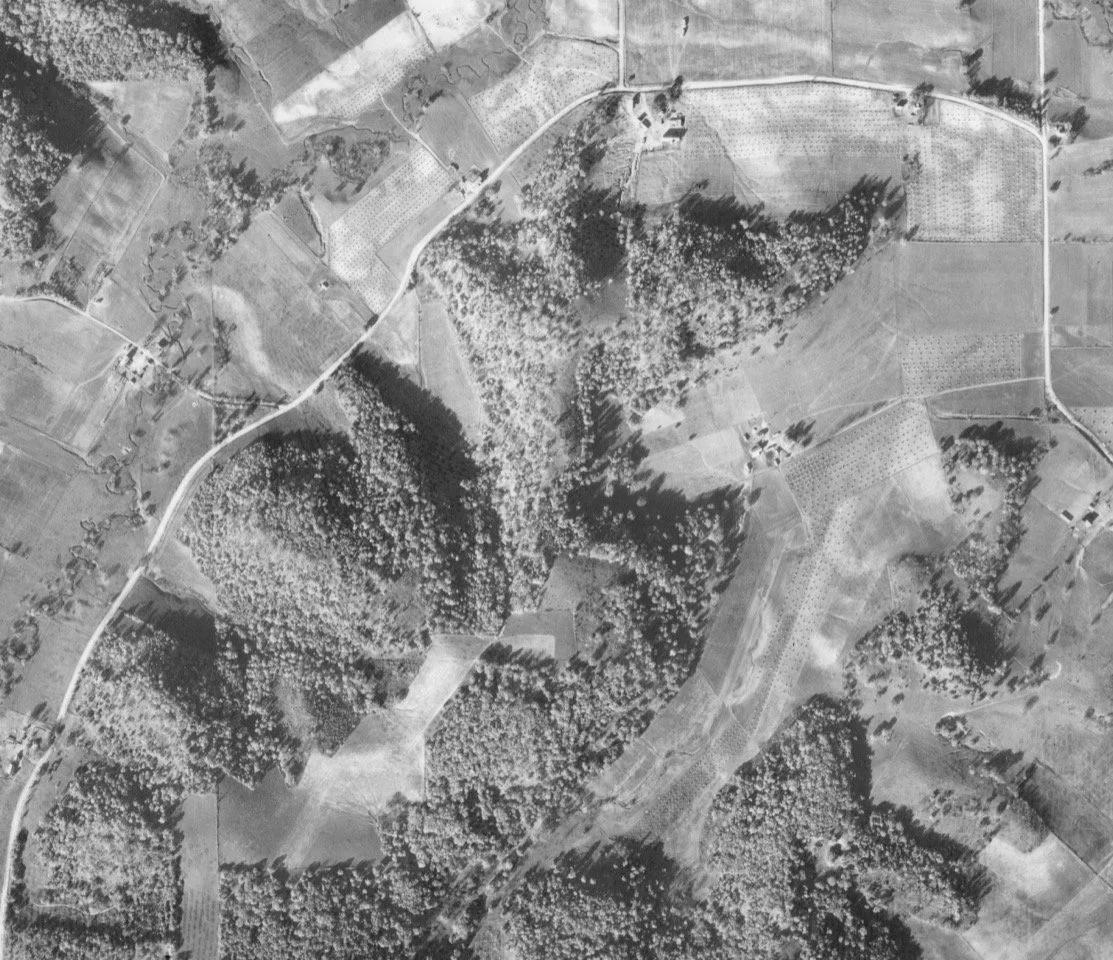
What I’m now realizing is that the same thing is happening to Spring Green Dojo as the training here matures. As you know, for many years we kept ourselves out of the public eye because we weren’t zoned properly for the activities that went on here. But now that we’ve corrected our zoning, our boundaries are softening. We can feel much more of the neighborhood, the community, the terrain beyond our property boundaries.
But it is not just us at Spring Green Dojo who are feeling this. It may sound strange but this Driftless Area is demonstrating in many ways what Zen folks call “resolving duality.” We talk about resolving the dualities of mind/body, self/other, life/death but there are many other examples surrounding us.
For example, Frank Lloyd Wright, with his home and architectural studio just down the road from us, broke down walls, letting the outdoors in to homes and the indoors out into nature. You walk through his Taliesin and feel a kind of ease as that happens.
And a recent article about the American Players Theatre – also just down the road – quoted David Daniel describing the power of performing in the open air. He said, “You’re hot? I’m hot. You’re getting rained on? I’m getting rained on. You’re getting bitten by a bug? I’m getting bitten by a bug.” That bond, that shared experience with the audience, gives a visceral power to the performance. The audience feels it; the actors feel it.
A recent conversation here was about the future of this Driftless Area and one focus was on the impact of fences marking property boundaries. Yes, those fences marked out what is mine and what is not mine, and they keep livestock from wandering. But there has been a price to those fences, as there is when one’s sense of identity is wrapped too tightly. People don’t often recognize that Robert Frost was being ironic when he wrote the famous line of poetry that goes, “good fences make good neighbors.” Not always.
So, we began talking about the electronics available for use with livestock that allows them to roam more freely over a larger area, easing their impact on any one area of terrain. And we talked about nearby Lowery Creek where the folks who own land along the creek banded together to ensure the water quality sustains the brook trout who like the cool spring water that comes up out of the limestone bedrock. Good examples of softened boundaries.
Beyond all this there are two organizations working over several decades to dissolve the duality of humans and nature. The Driftless Area Land Conservancy does what its name describes – it works to conserve land. But that can be working farmland that sustains migrating birds as readily as it is an area preserving a number of endangered plant species. They are working to help landowners find ecological connections beyond their own property boundaries. A prairie burn, for example, might be of greater ecosystem significance if was held over a much larger area than that owned by any one person.
A second organization, the Savanna Institute, demonstrates how farms can be more healthy and productive if there is more diversity of agricultural activities. Instead of planting a single crop across hundreds of acres, farmers plant rows of perennials - like chestnuts, hazelnuts, or black currants – and grow crops or graze animals in the spaces between them.
It is hard to predict what changes will happen across this region over the next 50 to 100 years. Certainly there will be changes to the climate and to the demographics. If the Driftless Area becomes a climate refuge for people moving away from deadly climate extremes of heat, rain and wind, will the average acreage for any one landowner become smaller, the landscape more fragmented?
If there is indeed going to be a wide-spread movement across the Driftless Area to soften boundaries, to take away fences, in all senses of the word “fences,” it will take a great deal of deep listening to all landowners – farmers, retirees, artists. People resist change and disruption; they more easily care for their land than for the land that surrounds theirs. As we know, there are cultural divides, social divides, political divides than can distort any attempt at conversation.
Listening, across those many divides, means to take away barriers to hearing different perspectives. Taking away barriers, dissolving dualities, is the daily work of our Zen training and it now is our responsibility to nurture that softening across this whole region we call home.
From the woods - Gordon
